ServicesVehicle Restraints
Vehicle Restraints in Bloomsburg
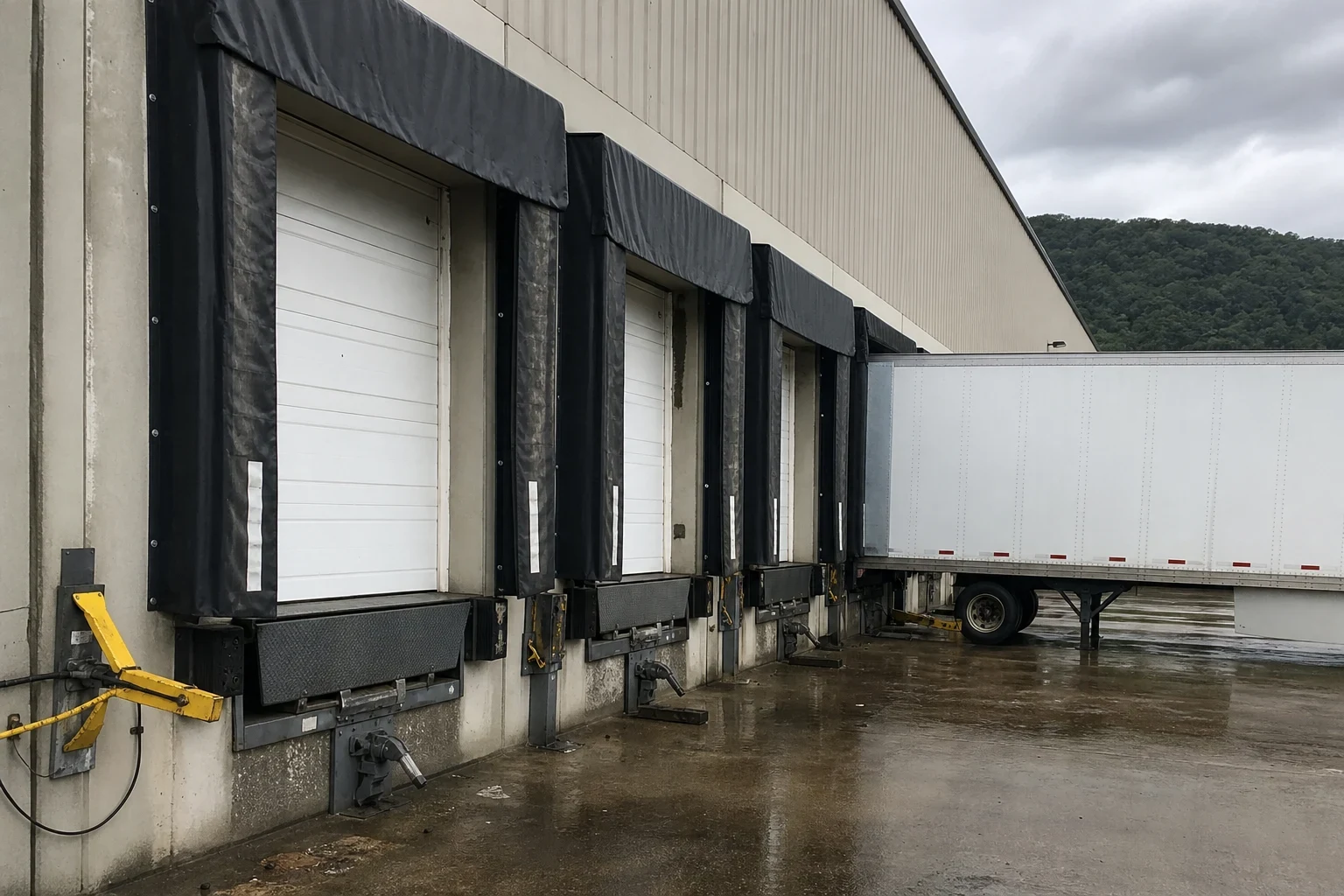
When a trailer creeps off the dock or leaves early, a forklift and its operator can end up in the gap. We repair, retrofit and install vehicle restraints that hold the trailer in place and give your crew light signals they can believe.
How a Restraint Keeps the Trailer in Place
The job of a restraint is simple. It locks the trailer to the dock wall until loading is finished. Most units hook the rear impact guard, that steel bar hanging under the back of the trailer. Some hold a rear tire instead. Either way, the trailer stays put while loaded forklifts drive on and off its floor, and a driver cannot pull away with someone still inside.
Chocks are better than nothing. But they skid on ice, get knocked out of place and only work if somebody sets them. A restraint wired to a light system removes that weak spot. The outside light turns red so the driver knows to wait. The inside light turns green so your forklift operator knows the trailer is held.
We service restraints at warehouses, distribution centers, grocery receiving docks and plants in Bloomsburg, Berwick, Danville and nearby. Sometimes it is a single unit that quit. Sometimes a facility wants every door working the same way.
What Our Vehicle Restraint Work Covers
- Hook restraint repair
- We fix bent hooks, worn carriages, weak springs and tired motors on mechanical, hydraulic and powered units. If the hook does not rise high enough to catch the bar, we find out why.
- Wheel-based restraints
- Some trailers have damaged or missing rear guards, or lift gates in the way. A wheel restraint holds the tire instead, so those loads are secured too.
- Light and signal systems
- We repair and replace the inside and outside red and green lights, sensors and controls. A light that shows green when the hook is down is worse than no light at all.
- Interlocks with doors and levelers
- We can wire the restraint so the overhead door will not open or the dock leveler will not work until the trailer is locked. That stops steps from being skipped on a busy shift.
- Retrofits and new installs
- We add restraints to existing docks, including mounting on worn concrete and pits. For a new building or a full dock upgrade, see our Loading Dock Equipment Installation page.
Warning Signs at the Restraint
Hook comes up short
When the hook rises but slips past the guard, or grabs some trailers and not others, the unit is worn or out of adjustment. That means some loads are going on with nothing holding the trailer.
Signals that disagree
A green inside light with the hook still stowed, or a red that never changes, points to a bad sensor or control. Once a crew catches the lights lying, they stop paying attention to them.
Rough or slow movement
Grinding, chatter or a hook that stalls partway up usually means a weak motor, low hydraulic fluid or a carriage that drags.
Corrosion at the base
Road salt and slush collect right at the bottom of the dock wall. Rusted tracks, anchors and wiring can let go with little warning.
Override used every day
An override is meant for the odd trailer, not every truck. If your people reach for it all shift, the unit has a problem.
What Moves the Cost of Vehicle Restraint Work
We will not guess at a restraint price over the phone without seeing the unit. Once we have looked, you get a written estimate with parts and labor on separate lines. These are the items that shift the total the most.
Type of restraint
A manual hook costs less to work on than a powered or hydraulic unit. Wheel-based restraints have their own parts and mounting.
Repair or replace
Adjusting or swapping a sensor is a small job. A cracked carriage or a motor on an old model with scarce parts may make replacement the better spend.
Interlocks and wiring
Tying a restraint to the door and leveler means more wiring and controls. Older docks often need new conduit run to reach the panel.
Condition of the mounting surface
Broken concrete or a damaged dock face has to be fixed before a restraint can anchor solidly. We point this out before we start, not after.
How many doors we handle
Grouping several doors into one trip spreads out travel and setup time. Each door tends to come out cheaper that way.
How a Restraint Job Runs at Your Facility
- 1
Start with a phone call
Let us know what the unit is doing, the brand if it is on the label, and which doors have trouble. We pick a visit time that works around your receiving hours.
- 2
Make the door safe first
Before any tools come out, we check that no trailer is at that door, barricade the opening and lock out power to the restraint. No one works next to a powered unit that could move.
- 3
Look it over and report back
We go through the hook, carriage, anchors, drive, lights and interlocks. Then we show you photos and give you a straight answer on whether a repair will last or replacement makes more sense.
- 4
Fix it and prove it
Once the work is done, we run a full cycle, with a trailer at the door if one is on hand. The hook must catch, the lights must change the right way and any interlock must hold the door or leveler when it should.
- 5
Return the door to service
We clean up, pull the lockout and walk your lead person through how the unit should act. If we notice problems at the doors or levelers next to it, we let you know.
Common Questions About Vehicle Restraints
Should we keep using wheel chocks once a restraint is in?
Plenty of facilities keep chocks on hand as a second layer, and some carriers or company rules call for them. A working restraint is the stronger safeguard because it ties into the lights and is hard to skip. We can go over what fits your dock and your policies.
Will you service a restraint someone else installed?
Yes. We work on most common makes. If a part has been discontinued, we say so before we start and lay out your options, including a replacement unit.
What about trailers with a missing or bent rear guard?
A hook has nothing to grab on those trailers. A wheel restraint holds the tire instead. If a lot of those trailers come through, putting a wheel unit on a few doors can be worth it.
Can a restraint be added to our existing dock leveler?
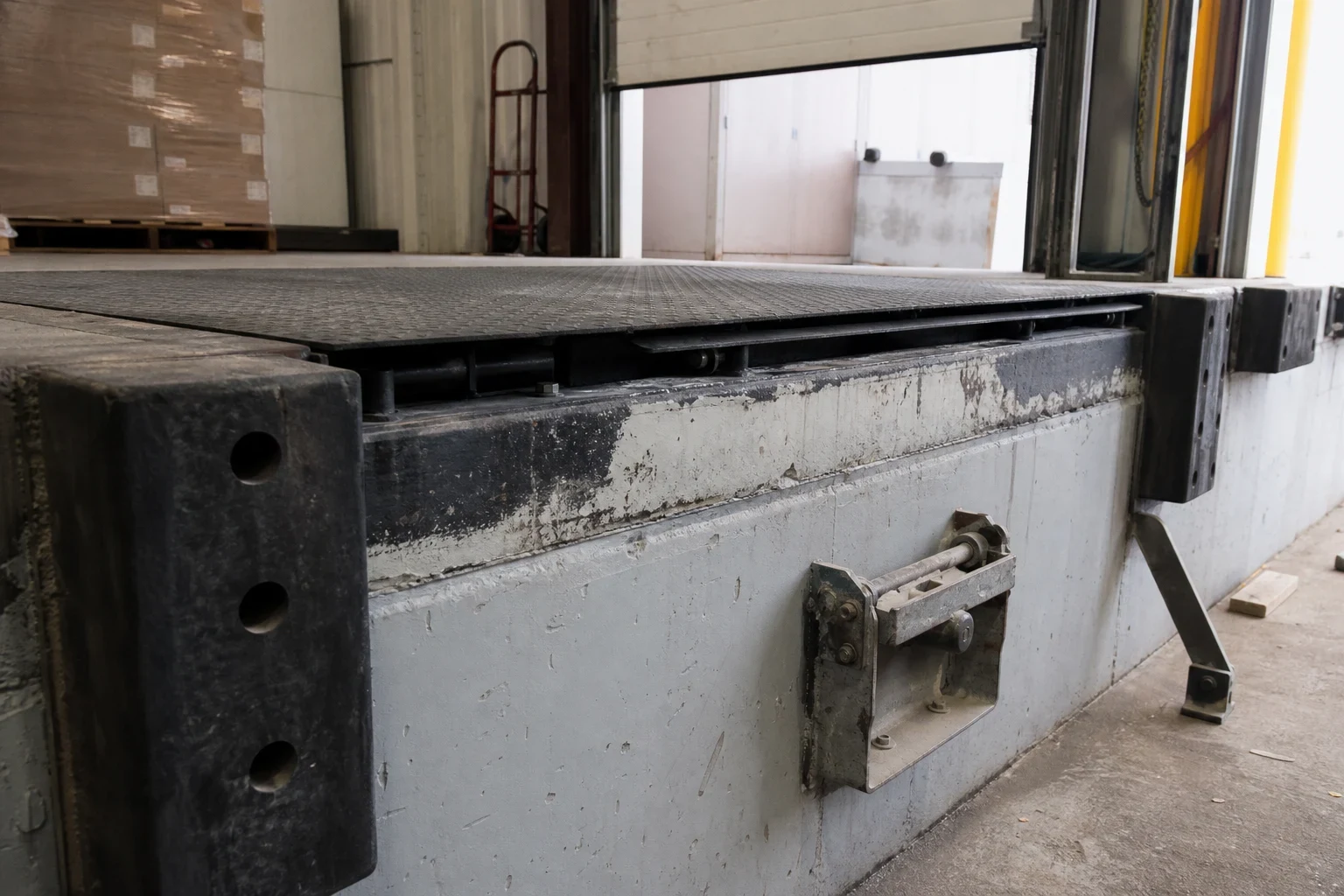
In most cases, yes. The restraint usually mounts on the dock face under the leveler. We check the concrete and bumpers first, and we can add an interlock so the leveler waits until the trailer is locked. If the leveler needs work too, our Dock Levelers page covers that.
How long will the door be down?
Smaller repairs often take part of a shift. Swapping a whole unit or running new interlock wiring takes longer. You get our time estimate up front, which lets you plan which doors take the day's trailers while we work.
What keeps restraints from breaking down again?
Scheduled checks find worn hooks, loose anchors and failing sensors before they stop a door. Our Loading Dock Preventative Maintenance visits cover restraints along with doors and levelers.
Get Your Trailers Locked In Right
Tell us what your restraint is doing and how many doors are involved. We will set a visit that works around your loading schedule.