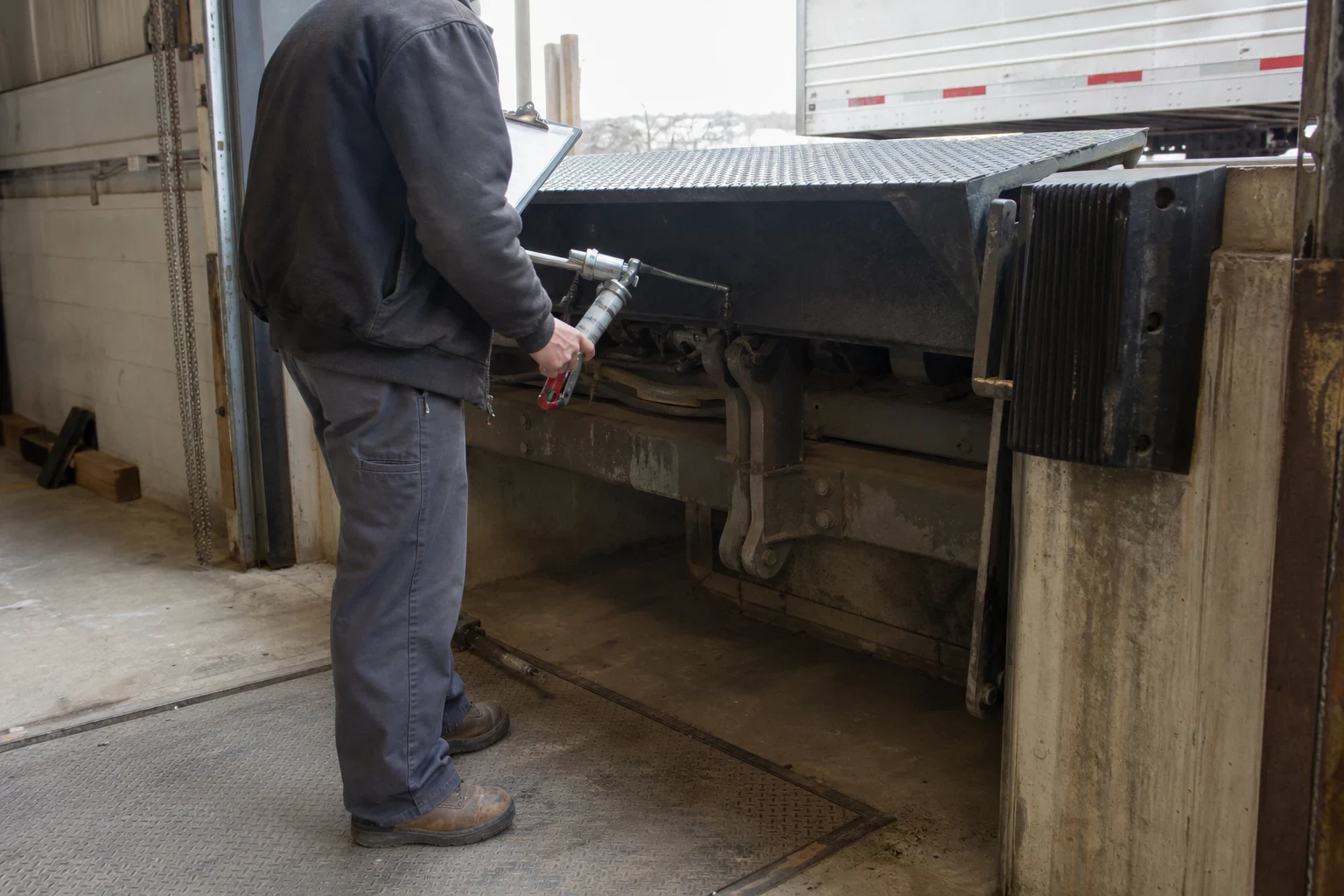
ServicesPreventative Maintenance
Loading Dock Preventative Maintenance in Bloomsburg
We service dock levelers, overhead doors and vehicle restraints on a set schedule. We lock out each door before we touch it, fix the small stuff while we're there, and give you a written list of anything that needs more work. Your crew keeps a safer dock and fewer surprises.
What Preventative Maintenance Means at Your Dock
Dock equipment takes a beating every shift. Forklifts slam leveler lips, trailers creep, and doors cycle hundreds of times a week. Parts wear slowly, and most failures give warning signs long before they quit. Preventative maintenance is a planned visit where we find those signs and deal with them.
Safety comes first on every visit. A leveler that drops without warning or a door spring that lets go can seriously hurt someone. So we start with the parts that protect people: maintenance struts, lip hinges, restraint hooks, door cables and springs. Then we move to the parts that keep freight moving.
It makes sense for any warehouse, plant or store that runs its dock daily. Facilities in Bloomsburg, Danville and Berwick see salt and slush tracked onto the dock all winter, which speeds up rust and wear on moving parts.
Equipment We Go Over at Each Position
- Dock levelers
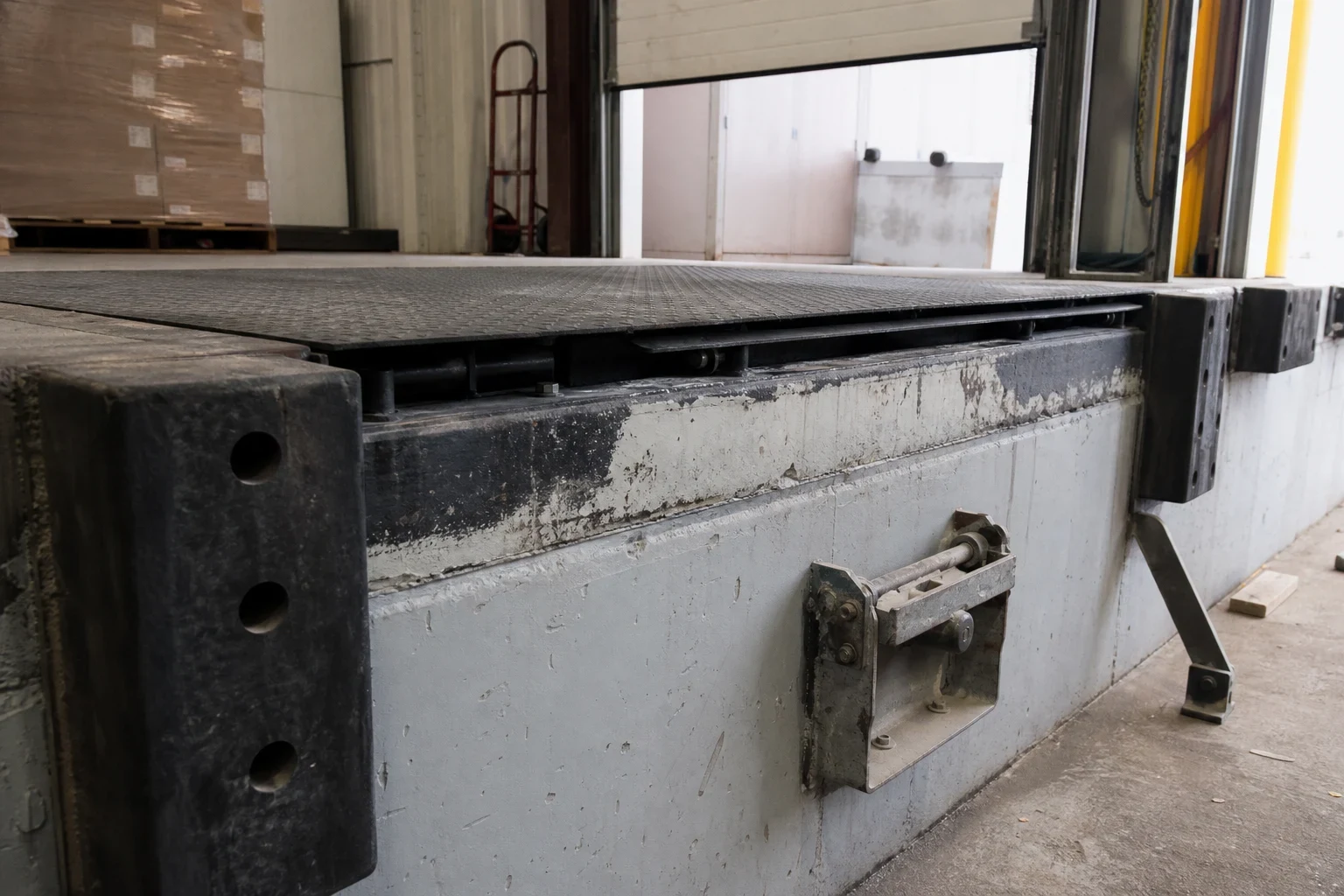
- Our tech looks over the deck plate, lip and hinge pins, and checks the welds for cracking. Hydraulic units get a fluid check plus a look at hoses and cylinders for weeping. We also test the maintenance strut and velocity fuse, the two parts that stop a deck from free-falling.
- Overhead doors
- Springs, cables, drums, rollers and track all get a hands-on look. We confirm the door is balanced and travels true. Frayed cables or loose track brackets go on the report as urgent. Moving parts get greased and anything out of adjustment gets reset.
- Vehicle restraints
- Each restraint runs through a full cycle so we can see the hook grab the trailer's rear impact guard. We make sure the inside and outside lights change with it. A driver who pulls away on a wrong light is how people get hurt at the dock.
- Seals, shelters and bumpers
- A ripped seal lets cold air and rain into the building. Bumpers worn thin let trailers strike the wall and the leveler. We record both so replacement can go into your budget.
- Written report
- Every door position gets its own line: what we saw, what we fixed and what's still open. Safety problems are listed apart from normal wear, so the urgent items don't get buried.
Signs Your Dock Is Overdue for Service
The leveler drops or bounces
A deck that settles hard or won't stay up points to a hydraulic leak, a weak hold-down or a worn spring. Keep people off it until it's checked.
Doors are loud or crooked
Grinding, banging or a door that closes at an angle usually means a worn roller, a frayed cable or a spring losing tension.
Restraint lights don't match
If the light shows green inside but the hook isn't on the trailer, your crew and drivers are working on bad information.
Oil under the pit
Fresh hydraulic fluid in the leveler pit means a seal or hose is failing. It's also a slip hazard.
Nobody remembers the last service
If there's no record, there's no way to know what's worn. A baseline inspection fixes that.
What Sets the Price of a Maintenance Plan
The price comes down to the equipment you have and how often we come out. We look at the dock in person and put the estimate in writing before work begins. Any repairs we turn up get their own quote, and the call on those is yours.
How many doors you run
Every position usually has a leveler, a door and often a restraint. Each one adds labor to the visit.
Equipment style and age
A hydraulic leveler has fluid, hoses and cylinders to check, so it takes longer than a mechanical one. Older units tend to need more adjusting and more replacement parts.
How often we come out
Docks with heavy traffic may need us every quarter. Quieter docks can stretch the time between visits.
Starting condition and parts
Cables, seals, rollers and bumpers that are worn out add parts to the bill. The first visit on a long-neglected dock runs higher, and the ones after it settle down.
How a Maintenance Visit Runs
- 1
Plan around your schedule
We talk through your dock count, shift times and busy days on the phone. Then we pick a time that keeps your trucks moving. We can work one door at a time so the rest stay open.
- 2
Lock out and mark off
Before we touch a door or leveler, we lock out its power and put up cones or a barricade. No one walks onto a dock position we're working on.
- 3
Inspect, adjust and lube
We go through each piece of equipment, tighten, adjust and lube as we go, and swap small worn parts when we have them on the truck. Anything bigger, we stop and talk to you first.
- 4
Test and hand back
We cycle every leveler, door and restraint before we remove the lockout. Then we walk you through the report and set the next visit.
Common Questions About Dock Upkeep
How many maintenance visits a year does a dock need?
For most facilities, somewhere between two and four. A distribution center running two or three shifts belongs at the top of that range. A store with a handful of deliveries a day can space visits further apart. After the first inspection we'll recommend a schedule that fits your traffic.
Will our whole dock be out of service during the visit?
No. We take one position at a time and the others keep working. The one we're on is locked out and blocked off, so everyone can see it's closed.
Do you repair problems right then?
Adjustments, lubrication and common wear parts we carry, yes. Larger jobs, like replacing a cylinder or a full set of springs, we stop and explain first. You get a price and decide before we go further.
Are overhead doors part of the visit?
They are. We go over overhead doors on every visit, along with dock levelers and vehicle restraints. High speed doors or rolling grilles in the dock area can be added to the plan too.
Is the report useful for our safety records?
It lists every position, what we checked and what we did, with the date. Plenty of facilities file it with their safety paperwork. It gives you a dated record that the equipment was inspected.
Put Your Dock Equipment on a Plan
Give us a rough count of your dock positions and how hard they work. We'll book a first visit and build a schedule that protects your crew and keeps freight moving.