ServicesEquipment Installation
Loading Dock Equipment Installation in Bloomsburg
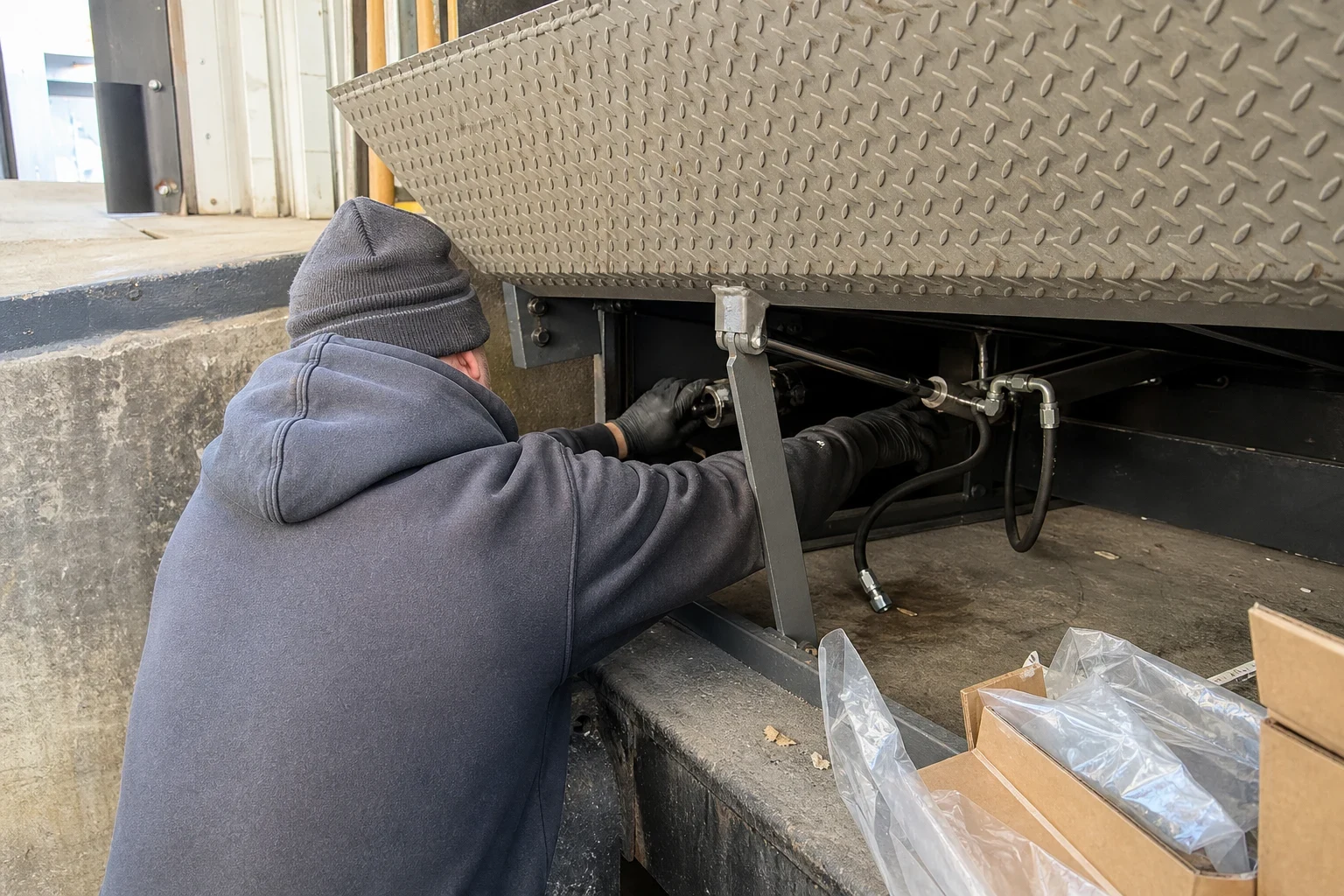
We install dock levelers, vehicle restraints, overhead doors, high speed doors and dock seals at working facilities. Every unit is anchored, wired and tested under load before a forklift rolls across it. You get a dock that works right on day one and a crew that knows how to run it.
New Dock Equipment, Set Up to Run Safely
Installation is the right call when you are building a new dock, adding a door position, or replacing equipment that is past fixing. It also makes sense when you are adding safety gear your dock never had, like a vehicle restraint or a light communication system.
Most dock accidents trace back to a few things: a trailer that creeps away, a leveler that drops, a door that closes on someone. Good installation removes those risks at the start. That means correct pit dimensions, solid anchoring into sound concrete, proper wiring and controls placed where operators can see the trailer.
We work around your schedule so one door is down at a time, and the rest of your docks keep receiving.
What Our Installation Work Covers
- 01
Site check and measurements
We measure pit depth, door openings, dock height and the trailer mix you see, from box trucks to 53-foot trailers. Those numbers decide which leveler length and capacity actually fit your traffic.
- 02
Dock leveler setting
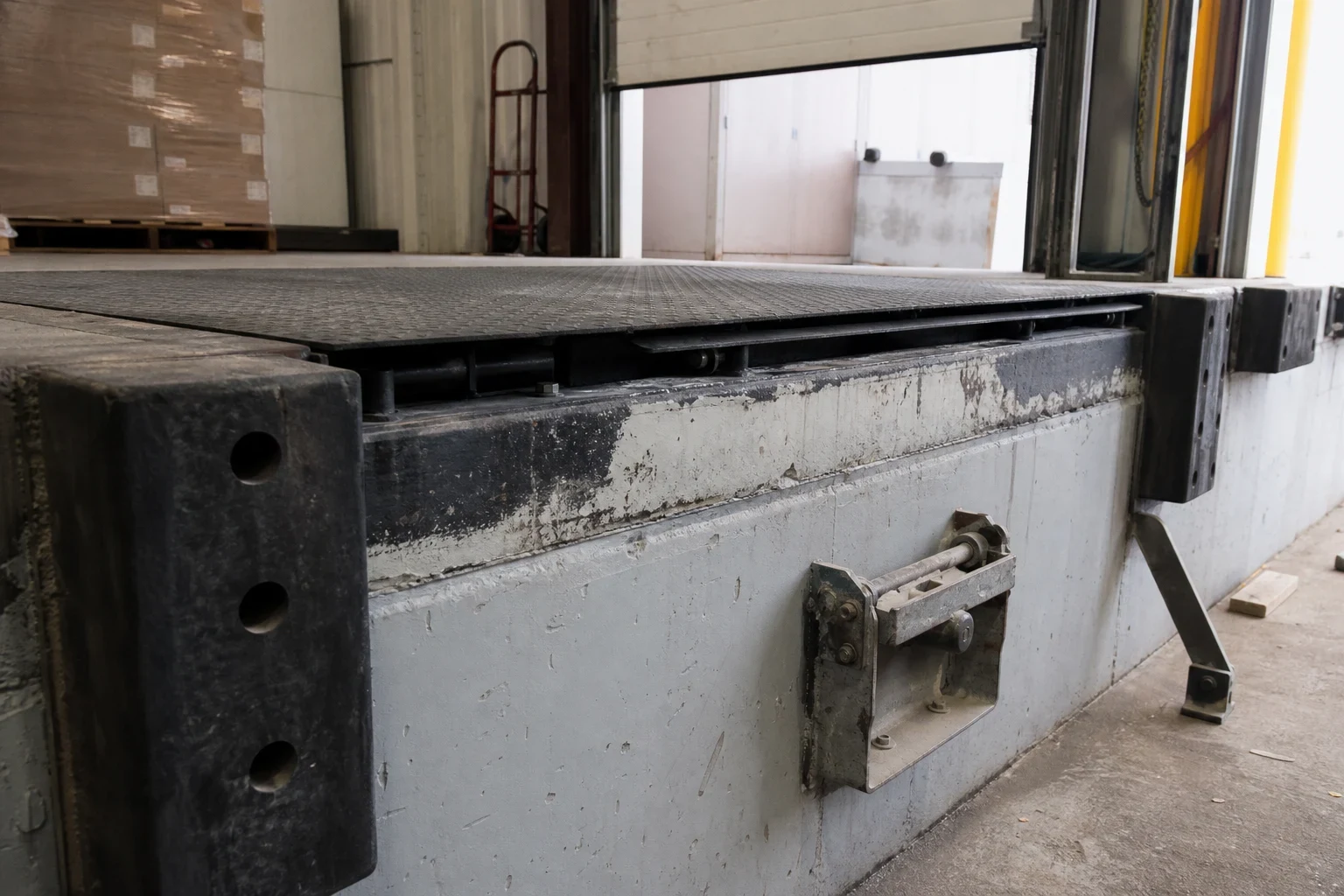
We set pit and edge-of-dock levelers level and square, then weld or anchor them to the curb angle. The lip, hinge and hold-down get adjusted before anyone drives on it.
- 03
Vehicle restraints and interlocks
We mount restraints to the dock face and wire them so the light signals inside and outside tell drivers and forklift operators the same thing. Where you want it, we interlock the restraint with the door or leveler.
- 04
Doors, seals and shelters
We hang overhead doors and high speed doors, then fit seals or shelters so the trailer closes the gap. A tight seal keeps out snow and wind and keeps floors dry near the leveler.
- 05
Electrical and controls
Control stations go where the operator can see the trailer and the leveler at once. We label the controls and test every stop and safety function.
- 06
Cleanup and handover
We haul off packaging and old equipment, sweep the work area and walk your crew through normal use and lockout steps.
Questions about Equipment Installation?
Call(570) 715-6617Signs It Is Time for New Dock Equipment
Repairs keep piling up
If the same leveler or door is down every few weeks, the parts and downtime can outrun the cost of replacing it. We will tell you plainly which way makes sense.
Trailers do not match your dock
Lips that barely reach, steep ramps or loads that bottom out mean the leveler is the wrong size for the trucks you get now.
Only chocks hold the trailer
With just a pair of chocks, a trailer can inch forward as forklifts drive on and off, or a driver can pull out while someone is still inside. A vehicle restraint locks onto the trailer until your dock crew releases it.
Cracked pits or loose anchors
Pennsylvania freeze-thaw cycles and road salt break down pit concrete and curb angles over time. Equipment sitting on failing concrete cannot be held securely.
You are adding docks or changing use
A new building, an expansion or a switch to refrigerated loads all call for equipment sized and sealed for the new work.
How an Install Day Runs
- 1
Walkthrough and plan
We look at the dock, talk about your traffic and hours, and agree on which doors go down and when. You get a written scope before work starts.
- 2
Lock out and secure the area
We lock out power, cone and tape off the work zone and keep your people and forklifts clear. No trailer is docked at a position we are working on.
- 3
Remove and prepare
Old equipment comes out, and we check the pit floor, walls and curb angle. If the concrete needs repair, we show you what we found before going further.
- 4
Set, anchor and wire
New equipment is placed, leveled, anchored and connected. Controls and signal lights get mounted at eye level for the operator.
- 5
Test and train
We cycle everything under load, check every safety stop, then show your crew how to run it and how to lock it out.
Pricing a Dock Equipment Job
No two loading docks are built alike, so we set the price after walking your site, not from a list. Equipment and labor go on separate lines in writing, and the total you approve is the total you pay unless you change the scope. Four things swing the price the most.
- Equipment type and rating
- A hydraulic leveler costs more than a mechanical one, and a higher capacity rating means a heavier deck. Your choice of restraint and door also shifts the total.
- Pit and concrete condition
- A sound, square pit goes quickly. Crumbling edges, an out-of-level floor or cutting a brand-new pit adds hours and material.
- Electrical work
- Existing power at the door keeps it simple. New circuits, interlocks and signal lights add labor.
- Number of doors and scheduling
- Doing several positions in one visit saves setup time. Off-hours work to keep your dock running can change labor costs.
Installation Questions We Hear
How long is a dock door out of service?
A leveler swap into a sound pit is often done in a day. New pits, concrete repair or added wiring take longer. We tell you the expected time per door before we start so you can plan receiving.
Can you keep our other docks running?
Yes. We work one position at a time and keep our zone taped off. Your other doors keep loading while we work, and we plan noisy or heavy steps around your busy hours.
Do we need a vehicle restraint if we use wheel chocks?
Chocks work only when someone sets them every time and the trailer cannot push past them. A restraint grabs the trailer's rear impact guard and signals its status with lights. Many facilities add one when they install a new leveler.
Will our crew know how to use the new equipment?
We do a hands-on walkthrough at the end of every job. Operators run the leveler, restraint and door themselves while we watch, and we cover lockout steps for cleaning and maintenance.
Can you install equipment we bought elsewhere?
Often, yes. We will look at the equipment and the specs first to confirm it fits your pit and door. If something does not match, we tell you before anything gets mounted.
What happens after the install?
New equipment lasts longer with regular checks. Our loading dock preventative maintenance visits catch worn seals, low hydraulic fluid and loose anchors early.
Get Your Dock Set Up Right
Give us a call with the equipment you have in mind and a rough idea of your daily truck traffic. We will go over sizing, safety gear and timing for your facility in Bloomsburg or nearby towns like Danville and Berwick.