ServicesEquipment Sales
Loading Dock Equipment Sales in Bloomsburg
We sell dock levelers, vehicle restraints and doors for warehouses, plants and receiving docks. Before we recommend anything, we measure your dock and ask what trucks and forklifts use it. You get equipment sized for the job and safe for the people working it.
The right equipment starts with a tape measure
Buying dock equipment from a catalog is how facilities end up with a leveler that is too short or a restraint that cannot catch half their trailers. We start at your dock. We check the dock height, the pit, the door opening and the range of trailer beds you see in a normal week, from low delivery vans to high reefers.
Then we match equipment to that. Leveler length decides how steep the ramp gets for a loaded forklift. Capacity has to cover the truck, the load and the impact of crossing the plate. A restraint has to reach the rear impact guards on the trailers you actually receive. Get those numbers right and the dock is safer every shift.
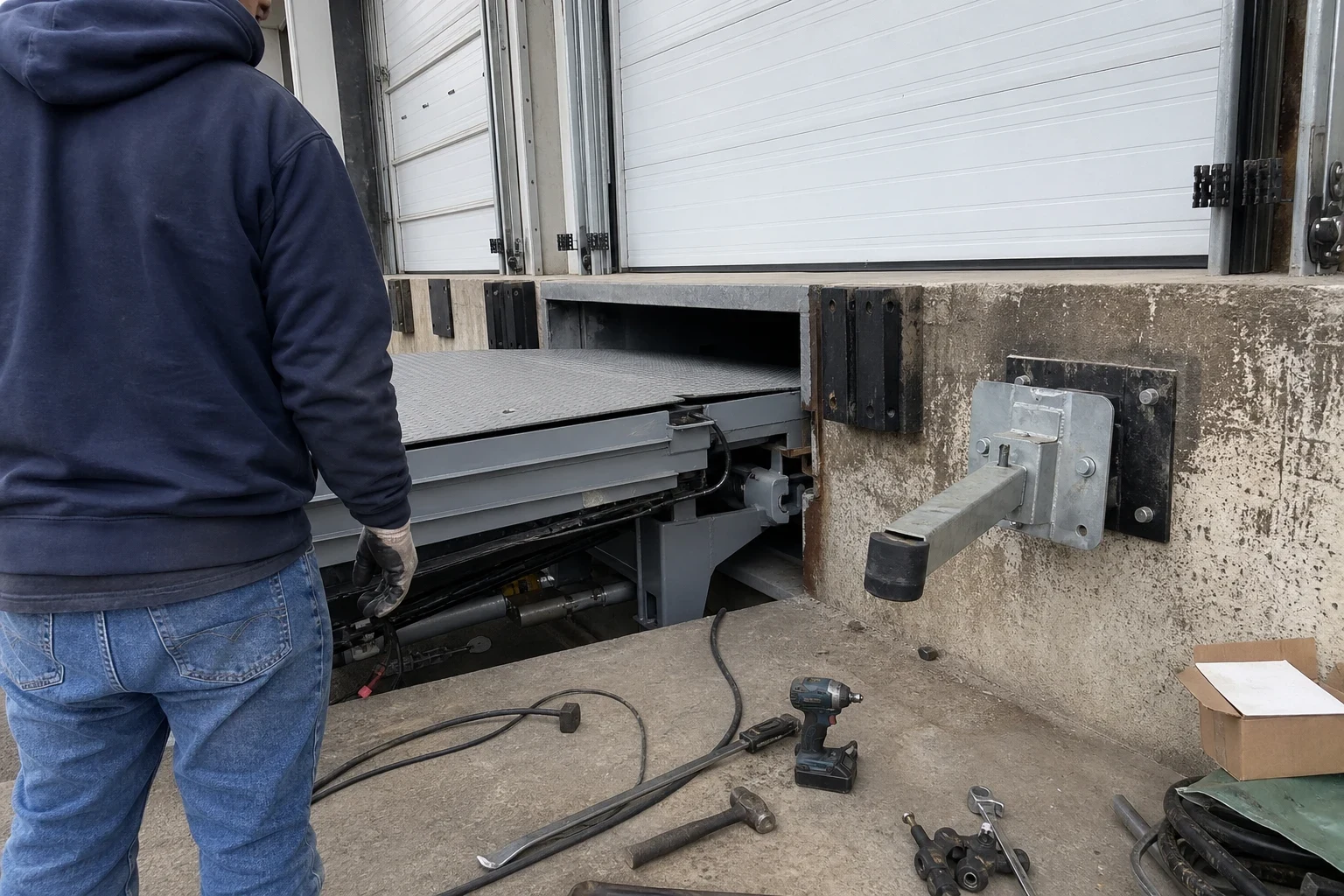
We will tell you plainly when a repair makes more sense than new equipment. If a new unit is the right call, we can carry it through loading dock equipment installation so one crew owns the job from measurement to the first truck.
What we sell and what comes with it
- 01
Dock levelers
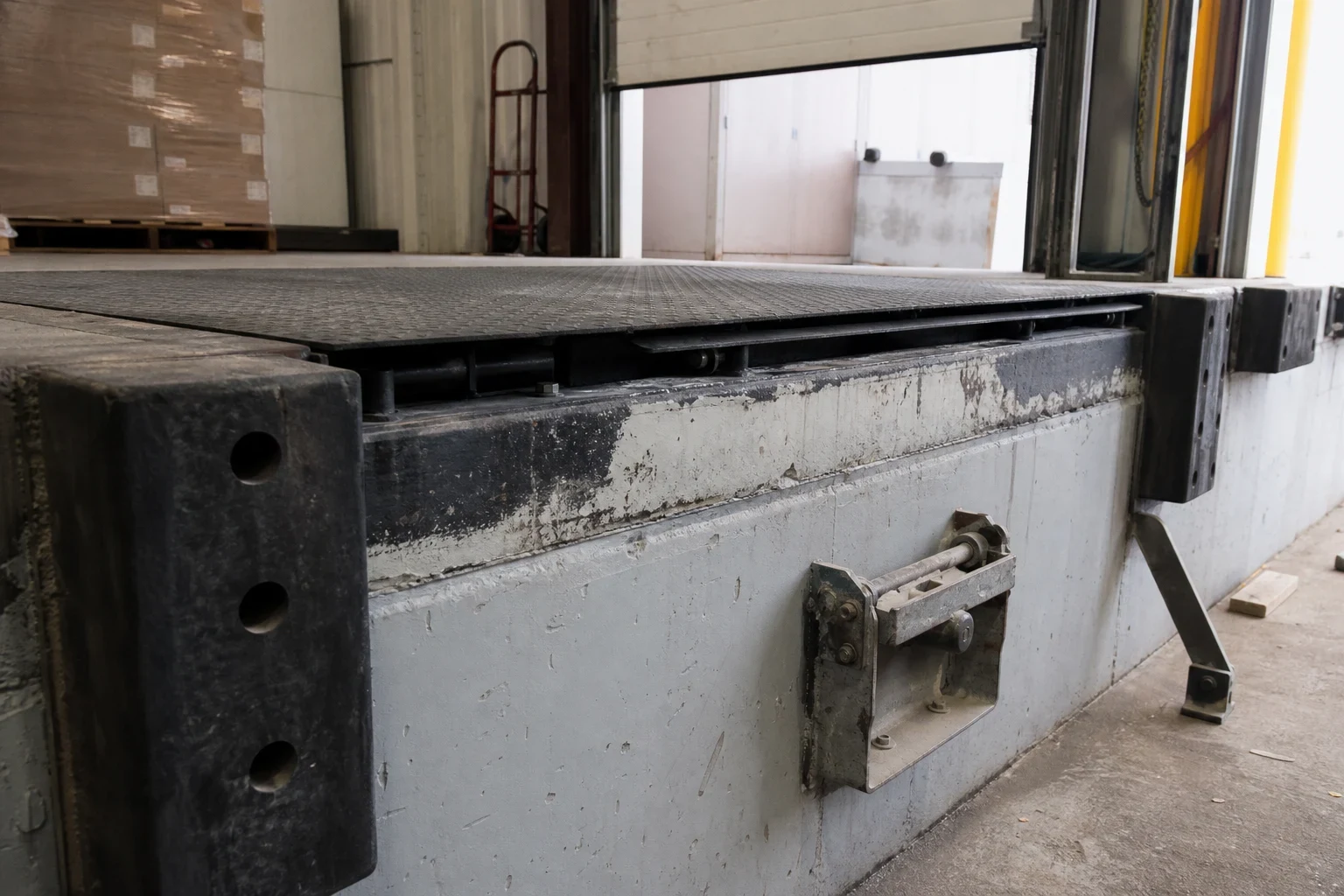
Hydraulic, mechanical and edge-of-dock levelers in the lengths and capacities your traffic needs. We size the lip and deck so the grade stays manageable for loaded forklifts.
- 02
Vehicle restraints
A restraint grabs the bar under the back of the trailer, called the rear impact guard, and keeps the trailer from creeping away while forklifts go in and out. Lights on both sides of the wall show the driver and the operator when it is safe to move.
- 03
Overhead, high speed doors and grilles
Insulated overhead doors, high speed doors for busy openings and rolling grilles for secure areas. Sized to the opening and the way the door gets used.
- 04
A site survey before any quote
We measure dock height, pit size, door openings and trailer bed heights. You get a recommendation based on your dock, not a guess.
- 05
A written, itemized quote
Each piece of equipment, the install work and any pit or electrical changes are listed on their own lines. You can see what each part costs and decide what to do now and what can wait.
Questions about Equipment Sales?
Call(570) 715-6617Signs it is time to look at new equipment
Forklifts bottom out or strain on the ramp
A leveler that is too short for your trailer heights makes a steep grade. That is hard on forklifts and on the operators driving them.
Wheel chocks are your only restraint
Chocks get forgotten, kicked out or lost. Trailer creep and early pull-aways are real risks, and a vehicle restraint takes the guesswork out.
Parts are getting hard to find
Older units from discontinued lines can sit down for weeks waiting on a part. That downtime costs more than most people expect.
Repairs keep coming back
When the same leveler or door is on the repair list every few months, it is worth pricing replacement side by side with another fix.
Your loads or trucks have changed
Heavier forklifts, new carriers or a shift to refrigerated trailers can push old equipment past what it was built for.
You are adding or rebuilding a dock
New construction or a remodel is the cheapest time to get pit sizes, door openings and restraints right.
How a sale works with us
- 1
A phone conversation
You tell us what your dock handles, what is giving you trouble and what you are thinking of buying. We ask about trucks, forklifts and how many doors are involved.
- 2
A visit to measure
We come to your facility, wear the right gear and stay out of active lanes. We measure each door position and look at the pit, the slab and the power available.
- 3
Options on paper
You get a written quote with the equipment we recommend and why. Where there is more than one good choice, such as hydraulic or mechanical, we lay out the trade-offs.
- 4
Order and schedule
Once you approve, we order the equipment and plan the install around your shipping schedule. Most jobs can be phased so only one position is out of service at a time, and your other doors keep shipping.
- 5
Startup and walkthrough
After installation we run each unit through its cycle and show your crew how to operate it safely, including what the restraint lights mean.
What moves the price
Every dock is different, so we price after we measure. The equipment is only part of it. The condition of the pit and the power at each door can matter just as much.
- Type and capacity
- Hydraulic units run higher than mechanical ones. Longer decks and higher weight ratings raise the price too. We size for your heaviest regular load, not the biggest number in the brochure.
- The pit and the concrete
- A new leveler that fits the existing pit keeps costs down. Cracked curbs, a pit that is the wrong size or damaged embed angles mean concrete work first.
- Wiring at each door
- Push-button levelers, motor-driven restraints and fast-acting doors all draw power right at the opening. If a position has no circuit yet, or you want the door wired so it stays shut until the trailer is locked in, that electrical work shows up as its own line on the quote.
- How many doors at once
- Equipping several positions in one project usually costs less per door than doing them one at a time over a few years.
Common questions before you buy
Will your crew put in the equipment too?
It will. Setting levelers, mounting restraints and hanging doors all fall under our loading dock equipment installation work. Because the people who measured your dock are the ones doing the install, there are fewer surprises when the equipment shows up.
Can a new leveler go in our existing pit?
Often it can. Manufacturers make plenty of replacement units that drop into common pit dimensions. Before we quote, we take the pit's measurements and look over the curbs and concrete, so you know ahead of time whether any rework is needed.
Hydraulic or mechanical, which is better?
Mechanical levelers cost less up front and run without power, but they need more effort from operators and more adjustment over time. Hydraulic units work with a push button and tend to be easier on people. Busy docks usually do better with hydraulic, and we will tell you if yours does not need it.
We use wheel chocks. Do we really need a vehicle restraint?
Chocks only work when someone sets them every time. A restraint holds the trailer at the dock and uses lights to signal when it is safe to load. For docks with steady traffic, we think it is one of the best safety upgrades you can make.
How long does it take to get equipment?
Lead times depend on the manufacturer and the model. We give you the expected timing with your quote and plan the install so your dock is not torn up while you wait for parts.
Do you serve facilities outside Bloomsburg?
Yes. We work with facilities in Bloomsburg and nearby towns including Berwick, Danville, Shamokin and Mount Carmel.
Get equipment that fits your dock
Tell us what your dock handles and what is wearing out. We will come measure and give you options in writing.