ServicesOverhead Doors
Overhead Door Repair in Bloomsburg
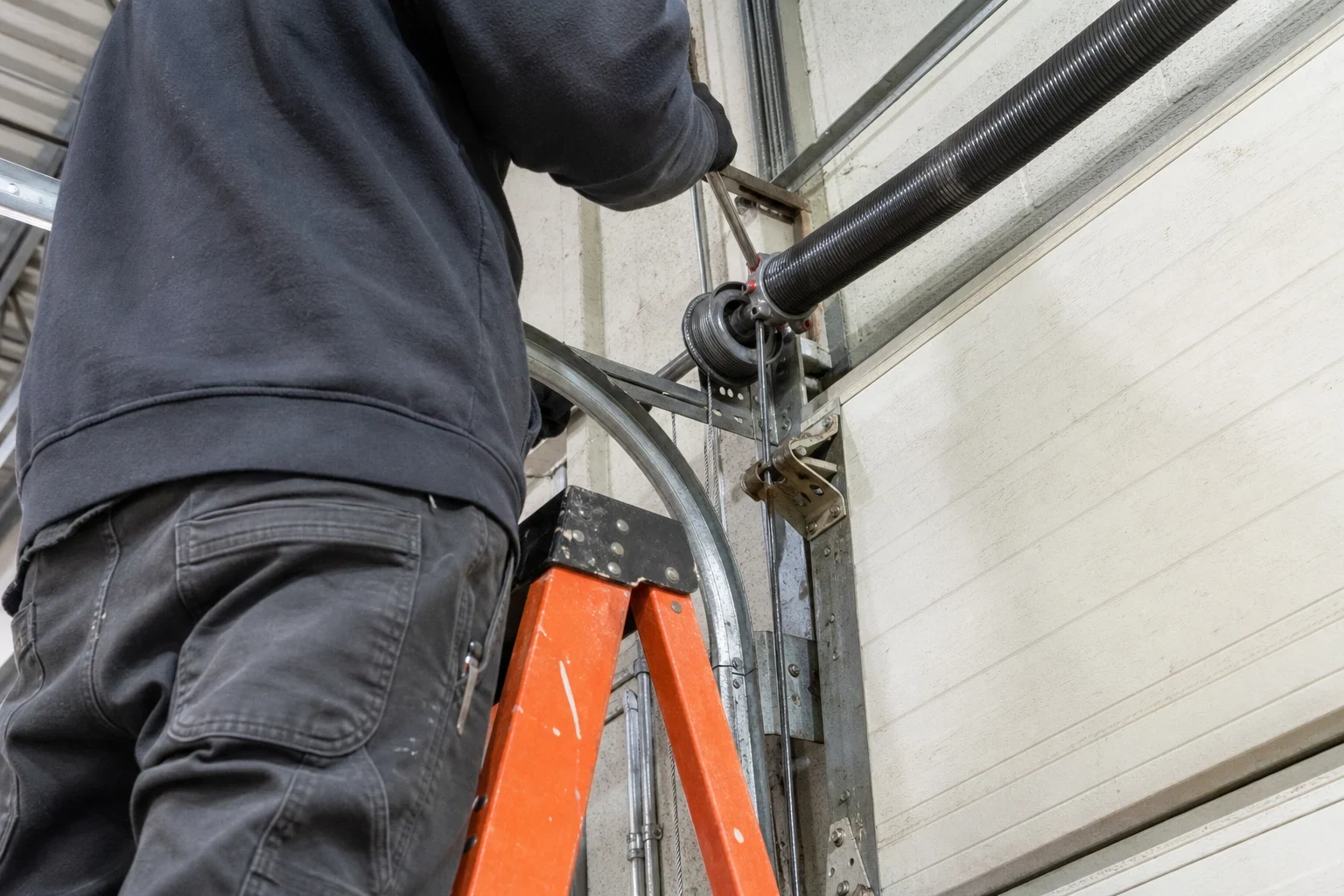
We repair and replace the overhead doors on your loading dock. That covers springs, cables, bent panels, worn tracks, seals and the operator that drives it all. Every job starts with the door locked out and secured, so nobody gets hurt while it is open.
What overhead door service covers
An overhead door at a dock opens and closes dozens of times a shift. It hangs on torsion springs wound to hundreds of pounds of tension, rides on rollers in steel track and seals against the trailer and the weather. When one part wears out, the others take the strain.
Most of the doors we see are sectional steel, some plain and some insulated, along with the commercial motor that lifts them. A job might be one snapped cable. It might be a panel a forklift caught, a door that creeps down by itself or a motor that has stopped working. We find the real cause and tell you plainly what the fix involves.
Safety drives how we work. A broken spring or a frayed cable can drop a door with real force. We never work under a door that is not clamped or fully down, and we test every safety device before we hand it back to your crew.
What the work includes
Torsion springs
We replace broken or tired springs and size them to the door's weight and how often it cycles. High-cycle springs make sense on busy docks. We wind and unwind springs with proper bars, never with improvised tools.
Cables, drums and bearings
Frayed lift cables and worn drums are a common reason doors hang crooked or slam. We replace them as a set when one side is worn, so the door lifts evenly.
Panels and sections
Forklift hits bend panels and kink struts. We replace damaged sections and add reinforcement where the door takes the most abuse.
Tracks, rollers and hinges
We straighten or replace bent track, swap out cracked rollers and tighten or replace loose hinges so the door runs quietly and stays in its track.
Seals and weatherstripping
Bottom seals and perimeter weatherstripping keep out snow, rain and heat loss. We replace torn or flattened seals so the door closes tight to the floor.
Commercial operators and safety devices
We repair and replace door operators, photo eyes and reversing edges. We set limits and force so the door stops and reverses the way it should.
Signs your overhead door needs attention
A loud bang from the door
That is often a spring letting go. Stop using the door and keep people out from under it until it is checked.
The door hangs crooked
One side lower than the other usually means a cable has slipped or frayed. Running it this way can jump the door off the track.
It drifts down or feels heavy
A door that will not stay open, or that the operator struggles to lift, has springs that are losing tension. That puts load on the operator and on anyone working beneath it.
Grinding, scraping or shaking
Bent track, dry or broken rollers and loose hinges make noise before they fail. Catching it early is usually a smaller repair.
Light or drafts at the bottom
Worn seals let in cold air and water. In a central Pennsylvania winter that also means ice at the threshold, a slip risk for your dock crew.
The door does not reverse
If the door does not back off when the photo eye is blocked or the edge is touched, take it out of service. That is a safety failure, not a nuisance.
What happens on the job
- 1
Start with a phone call
Describe what the door is doing and how busy that bay gets. We ask a few questions and pick a time that works around your trucks.
- 2
Lock out and secure the door
On arrival we cone off the work area, disconnect power to the operator and lock it out. The door is clamped or lowered before anyone touches springs or cables.
- 3
Look it over and report back
We check springs, cables, track, panels, seals and the operator. Then we tell you what broke, what is about to go and whether fixing or replacing is the smarter move.
- 4
Do the work you approve
Nothing gets done until you say yes. Parts are matched to the size and weight of your door, and we stay in the one bay so the rest of the dock keeps running.
- 5
Test and hand back
We balance the door, set the operator limits and test the reversing devices several times. We clean up, haul off old parts and show your team the door working before we leave.
What sets the price of a door repair
The price comes down to what failed, what wore out alongside it and how big and heavy the door is. We price the job once we have looked at the door. You hear what each part is for before any work begins.
- Door size and weight
- Larger, heavier and insulated doors need bigger springs, heavier cable and more labor to handle safely.
- Extent of damage
- A single snapped cable is a short job. A forklift strike that bent panels and track takes more parts and time.
- Which springs go on the door
- Springs built for more open-and-close cycles carry a higher parts price. On a bay that runs every shift, they hold up much longer before the next replacement, so we talk through which kind fits your traffic.
- Operator repair or replacement
- Fixing a sensor or limit switch is minor. A worn-out operator that needs replacing adds to the total.
- Scheduling around your dock
- Work set before or after your busiest shipping hours can change how the job is staffed and timed.
Common questions about dock doors
Something not covered here? (570) 715-6617
Is a broken spring something our own crew can swap out?
Please don't try it. A wound torsion spring stores enough force to cause serious injury if it slips while being wound or let down. Lower the door if that is safe, rope off the bay and leave the spring work to a tech with winding bars and clamps.
Should we keep using a door that hangs crooked?
No. A crooked door usually has a slipped or broken cable, and running it can pull the door out of the track or drop it. Close it if you safely can, tag it out of service and have it checked.
Is it better to repair or replace the whole door?
Most doors are worth fixing, especially when only a few panels or some worn hardware are involved. A door that has taken hit after hit, is rusted through or will not seal anymore may be cheaper to replace than to keep patching. We give you our honest pick and the reason behind it.
Do you work on the operators too?
Yes. We repair and replace commercial door operators, photo eyes and reversing edges. A door with good springs and a bad operator is still a door your crew cannot rely on.
Can you set up regular checks for our doors?
Yes. Our loading dock preventative maintenance visits include the overhead doors along with dock levelers and vehicle restraints. Regular checks catch worn cables and tired springs before they fail during a shift.
Do you serve facilities outside Bloomsburg?
We work across the area, including Danville, Berwick, Shamokin and Mount Carmel. Give us a call and tell us where your facility is.
Get your dock door working safely again
Tell us what the door is doing and we will set a time to come out, lock it out and fix it properly. Your crew gets a door that opens, closes and reverses the way it should.